
Author Archives: nickspreparedness5277

How Do I Zero My Rifle?

It’s finally fall here in northern Alabama and the first few cool snaps have begun to give us a chill when we walk out of the house in the mornings. To many across the country this first bit of cool air signals the beginning of hunting season in the near future. For the thousands of deer hunters, fall is the time to dig out the rifle and make sure the scope is still zeroed by shooting a paper plate on a fencepost at 100 yards, give or take. For years I have taken part in this annual observance of accuracy, at least until I learned that you are better off to shoot more often and in different positions than once a fall over a truck hood. I’ll take up the cause of regular shooting in another post and stick with the basics of zeroing a rifle here. If you’d like to know more about some good practice habits, read my post on dry fire training Here.

Before handling any firearm for any purpose, please read about the four cardinal safety rules Here.

What Does It Mean To Zero A Rifle?

The simplest and most accurate definition of zeroing, or a zero, is adjusting the sights of the gun to match the location that the bullet impacts the target. It sounds very simple, and at a fixed distance, it is. However, gravity and other factors work together to make it impossible to have a fixed zero for every range. If you’ve heard the words “Kentucky Windage,” then you have heard of someone using an estimation based on distance and wind to compensate for the variables and still hit the target by aiming high, low, or to the side. Long range shooters may use telescopic sights (scopes) with exposed turrets to adjust the impact point to compensate for wind and distance as well. These skills can be very useful, but a solid base zero is where it all starts.

What Range Should I Zero My Rifle At?

If we asked this question in a message board, we would likely get almost as many different answers as there are members in the group and most of them would likely be correct given a certain situation. I’ve done a pretty good bit of shooting, both hunting and competition, and I’ll offer my findings in this post, but you may find that something else works better for you so I don’t expect or encourage anyone to take this as gospel. I propose that we zero our rifles for the range that we expect to use them. For a .22 caliber rimfire rifle used for small game such as squirrels, 25 yards or so is probably going to be pretty close to perfect. Here in Alabama, the average shot at a whitetail deer is probably just under 100 yards, however the ballistics of most high powered rifle cartridges allow the bullet to hit within a couple of inches over the first 200 yards so for my purposes, a deer rifle can be perfectly zeroed at 200 yards and will shoot 1-2 inches high at 100 yards. That’s well within the vital zone of a deer and allows me some breathing room at slightly farther shots too. An elk hunter out west might find a 300 yard shot to be common enough to zero there and make adjustments for shots closer. The military zeros are often 25 meters because the arc of the bullet’s flight makes it practical to hit a human size target in the vital zone of the torso from up close to well past 200 yards or meters. I personally zero my defensive rifles at about 200 yards and know how much to compensate to hit accurately at 300-400 yards. This setting covers me from up close to well beyond the range that I would plan on engaging targets in a defensive situation. With all that said, we have to base or zero distance on our situations and plan to adapt if need be. It isn’t set in stone and if we find ourselves needing a different setup then its a matter of a few clicks of the turret. Click the picture below for some good targets to zero your rifle or pistol with.

Types of Sights

A brief description of sight systems is helpful for us to understand how to zero our rifle, so I grouped them as broadly as I could to keep from going too far down each rabbit hole in this post.

Iron Sights: Since the rifled gun barrel was invented in the late 15th to early 16th century and vastly improved in the 18th century with the Kentucky long rifles, we have had some sort of sighting system that has consisted of one or more aiming points attached to the barrel or receiver of most guns, rifle or pistol. These sights can be as simple as a front bead at the end of the barrel to a dual aperture target sight capable of very precise adjustments such as the ones used on Olympic style competition rifles. The most common sights that we will likely find on our hunting and defensive guns will either be a buckhorn or an aperture rear sight with a post of some sort on the front. Depending on the setup, the adjustments can be limited to drifting the rear sight back and forth in its slot to correct windage and sliding up or down the ramp to correct elevation, to more precise screw type adjustment knobs. Some rifles such as AR style guns, require adjustment of the front sight post for elevation and others such as the AK style sometimes require front sight adjustment for windage. I’ll do separate posts or videos later to cover some of those.

Telescopic Sights: Often called a “scope,” a telescopic sight magnifies the image through a series of lenses just like binoculars or glasses. In fact, a rifle scope is really a telescope with a reticle of some sort to provide an aiming point and a way to adjust it. Early target style scopes, such as those made by Unertl, even had all of the adjustments made into the mounting rings which meant the body was almost identical to a telescope. Because of the advantage of magnifying the view of a target, scopes have become almost standard on most hunting and target rifles, unless the rules of a particular sport don’t allow them. Many modern scopes are variable power and have magnifications that can be adjusted by turning the eyepiece or a dial. Common hunting scopes are 3 to 9 power or 4 to 14 power. By “power” the manufacturers mean the magnification. An object in a 3 power scope appears 3 times closer than it would to the naked eye. A large number of defensive rifles are outfitted with 1 to 4 or 1 to 6 power scopes because the lower magnification helps keep the field of view wider and its easier to scan the area for threats and avoid tunnel vision. Precision and competition scopes may run from magnifications similar to hunting scopes all the way up to around 50 power magnification. While these can provide great visual clarity of a distant target, the field of view is very small up close and it can be difficult to locate a target with one of these. For a decent quality scope at a good value, click the picture below.

Red Dot/Holographic Sights: A sight system that has become almost standard in defensive weapons of all kinds in the last 20 years is the “red dot” sight. there are different ways that red dot sights work, however most of them are unmagnified and simply have a red or green illuminated dot that is the aiming point. These offer the user quick target acquisition and can be used with both eyes open so threats can be identified as early as possible. You can combine the red dot sight with an external magnifier or purchase a scope with an illuminated dot within its reticle to get a similar experience but with the option to see more distant targets too. If you want to try out a red dot sight, click the picture below for a quality sight at a reasonable price.

Basic Sight Adjustment

Because of the numerous designs of sights on the market, I will just give the basics of sight adjustment based on the adjustable rear iron sight, the standard telescopic sight, and the standard red dot sight. As I said before, some of the most prolific battle rifles we use as defensive guns have their own iron sight adjustments that I’ll cover in separate posts or videos.

Establishing Point of Impact: The first step of adjusting a sight is to determine the current point of impact. If we have a sight or scope professionally mounted, we might have the shop or gunsmith bore sight the sight to get it close before we start. Even then, a few shots are required to know for sure where you are hitting the target. If you want to save a few shots, you can click the picture below to get a bore sighting kit for yourself.

Find a Steady Rest: Either laying down on your stomach or sitting at a table or bench where you can support the rifle’s fore end and the butt stock with sand bags or a rifle rest is necessary to get an accurate point of impact. Good shooting requires consistency in grip, trigger squeeze and follow through and there are hundreds of videos and posts available for you to help perfect yours, but in person training is the best way to learn. You can use a purpose built mechanical rest like the one pictured below with some shooting bags to get a firm position to fire from. Click to picture to look closer.

Find Initial Point of Impact: Fire 2-4 rounds slowly from the steady position you have created. Sometimes it is necessary to begin this with the target as close as 25 yards to “get on paper.” No adjustments should be made until we are able to place multiple shots in an area very close to each other. If we are having trouble getting multiple shots in a small group, we need to first check our grip and firing position then check the weapon and ammunition for problems.

Making The Sight Adjustments: Again, this will vary by type, but most scopes and red dot sights will have some form of turret or screw that will adjust elevation and windage. Some iron sights will be similar, while some may have to be slid over manually and elevated with a movable ramp. The standard rule for adjusting scopes and rear portions of iron sights is to move the blade, aperture, or reticle in the direction you want the bullet to go. If I am hitting below my aiming point, I will adjust the sights or the scope dial up. (scope dials are usually marked in at least one direction, such as “up” or “right.” Most scopes will have markings that specify how much each click of the dial moves the sight at a 100 yard distance. If our scope has 1/4 inch adjustments at 100 yards and we are hitting 4 inches low, we would adjust our elevation up 16 clicks. (In theory this sounds great, but I have found that the accuracy of the click values varies based on the quality of the sight. Don’t be shocked if you have to make multiple adjustments to get your point of impact perfect.)

Fire A Group to Verify: As I mentioned, the combination of variances in the sight and human error on my part usually mean I have to make more than one adjustment. To verify the adjustments I make, I need to repeat the first step using the same rest and grip as I did to fire my first shots. I need to have the verification shots form a close group as well. This process should be repeated until we are satisfied with our zero point.

Protect the Adjustments: Sights and scopes are reaching unheard of levels of durability in the last few years, however, they can still be disturbed. By replacing the turret covers on scopes and red dot sights and tightening any set screws on adjustable iron sights, we can prevent them from being accidentally adjusted. It is also important to avoid impacts to the sight system or its mounts. Dropping a gun to the ground or banging the sight on a doorway when its slung over a shoulder both can cause a shift in the zero and the rifle should be checked for accuracy as soon as possible.

Final Points on Sight Zeroing a Rifle

As with much of the information I share, this post is more about awareness of a skill than an absolute method to follow, however there are a few notes that I feel I need to add. The first is that not everyone is a born shooter. We have different learning curves and whenever possible, using a coach or trainer can really help us progress much more quickly than trial and error. Either way, don’t get frustrated that perfect shooting isn’t instantly obtainable to you. The second is that burning powder generates a lot of heat which can cause the barrel of a rifle to deflect slightly. To get the most accurate grouping of your bullet impacts, let the gun cool off after a few shots. Firing repeatedly can have us chasing a point of impact that keeps moving and we just make things worse.

Disclosure: I am an Amazon affiliate and may make money from qualifying purchases.
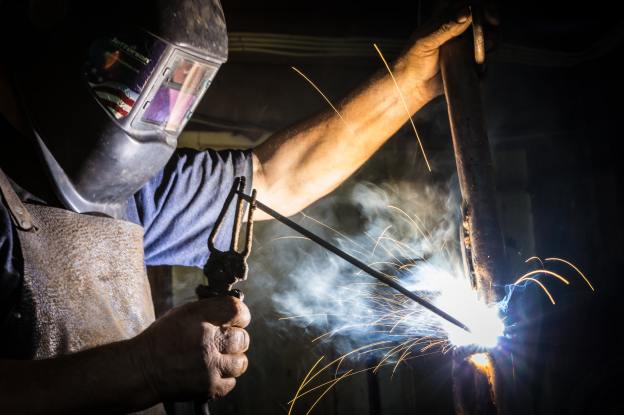

How Do I Weld Metal? A Valuable Prepper Skill

Sometimes we find ourselves in need of something specific to our situation that no ready made source seems to offer. Other times we need to repair something that is inconvenient or impossible to move. Often times we simply enjoy the satisfaction of building something for ourselves. Learning how to make basic welds on metal is a great way to reach many of these goals, and often with less expense than purchasing or hiring the work out to be done. There are initial costs when purchasing a welder and there are consumables such as rods, wire, and gasses, but it usually doesn’t take but a few projects to absorb all of that cost and leave you ahead of the game financially

What Is Welding?

In its most basic form, welding is heating two pieces of metal, often with a filler material included, to a temperature where all of the two or three melt and bond into one fused metal. This task was originally done by blacksmiths who heated metals in a forge and would get them to a near liquid state and beat them together on an anvil to fuse them. Those who watch some of the reality shows such as Forged In Fire will see a form of welding done when the blacksmiths forge and hammer wire into solid steel to for a Damascus metal blade. Modern welding is more often done with either an oxy/acetylene torch or with electricity to melt the metals together. When welded properly, the weld seam is even stronger than the metals that it joins which leaves no doubt as to why its handy for building and repairs.

Why Do Preppers Need To Learn To Weld?

There is almost no end to the skill sets that we could benefit from as preparedness minded individuals and by no means do any of us have time to learn, much less master, all of them. If at all possible, we should seek out a network of like minded individuals with which to barter both supplies and skills. Just as one nurse can benefit a large number of people in a group, so can one skilled welder, mechanic, gunsmith, carpenter, butcher, etc. Now that we have covered that no everyone is going to be a welder, we can get into the importance of having at least one in our midst as a prepper group.

Repairs: Based on the situations we find ourselves in, we may not be able to get to a repair facility. Our implement that is broken may not be easily transported. Shops may be closed or unavailable due to disaster or unrest. We may also have projects that we don’t necessarily want anyone to know about besides our group. Consider a steel vault opening or a set of metal stairs leading into a bunker we have dug into the ground. If I took the time to plan and build such a place, I would be very concerned about my operational security (OPSEC) when it comes to having work done on the site. You may have a vehicle that you have modified for special defense or security purposes and you don’t want it sitting in a repair shop drawing suspicion. For less secretive purposes, having some type of welder, especially a portable one will allow us to repair gardening and homesteading equipment whenever and wherever we need to. A broken trailer axle or tongue three miles up a logging road, full of fire wood is no place to be without a way to make a repair. If you want to read more about OPSEC, check out my post on going undetected Here.

Fabrication: The world is now full of products that fit our needs as preppers and survivalists. I try my best to review and post the ones that I believe we can benefit from both here and on my YouTube channel, however not all of them fit our exact needs and, again, good OPSEC may dictate that we chose not to order or purchase some items on the market. I began working with and around welders and torches in high school while working for a trucking company. After starting college I went to work for a wrecker service that built equipment which offered me an opportunity to do more fabrication work. Creating a usable piece of equipment out of nothing more than tubing, angle iron, and flat steel is an incredible feeling and it is not as hard as you would think. Often times it is possible to repurpose and salvage unused metal on hand to build something new and useful to us. In the future, I’ll try to add some posts and videos of projects as I do them, but for now, just consider anything that you see made out of metal, especially steel to be something you can use, repair, or replace with welding skills.

What Types Of Welding Should We Learn As Preppers?

I am going to limit this post to just a few types of welding that are pretty easy to become proficient enough in to handle around the house or farm type repairs and projects. There are many more and they produce amazing results, however, the equipment cost and techniques needed are more reserved for the career welders. If you have one in your group, they can produce amazing work. If you want to learn on your own, click on the picture for a welding manual.

Oxy/Acetylene Welding: Next to the ovens in the blacksmith’s forge, this is likely one of the most elementary welding methods, based on equipment. Using a torch fueled by a mixture of oxygen and acetylene or propane, the flame is focused on a narrow point on the metals and as they melt, a filler rod is added to the joint. One note to add to this is that almost all welding methods produce or render out impurities in the metal. The addition of some sort of flux or shielding gas is needed to remove the impurities and is often a coating on the filler material rod. For lower stress joints and sealing up certain types of metal fittings, lower heat options such as soldering or brazing also make use of a torch.

An added benefit of having a welding torch is that the system usually includes a cutting attachment which is a very handy tool to cut metal with. You can get a handy portable torch set by clicking the picture below.

Stick Welding: Shielded metal arc welding (SMAW) is informally known as “stick welding” due to the electrodes that are used. The electrode, or rod, is a metal rod about 12 inches long that has a diameter ranging from 1/16 of an inch to 3/16 of an inch or larger which is covered in a hard coating that melts off and helps remove impurities in the weld as it burns. Because of the variety of rod types and sizes available, and the portability of some of the machines, stick welding is one of the best choices for use on the farm and around the home. Depending on the amperage your welding machine is capable of, it’s possible to weld up to 3/8 of an inch thick steel or more with a machine that can be powered by single phase current found in homes. While preparing the welding surface is crucial to getting the best results, several rod varieties are also known to perform well in less than ideal environments such as rusty or dirty metals. Other methods don’t readily offer this luxury. One of the staples found in many workshops, garages, and barns is the reliable Lincoln Electric “Buzz Box.” You can check it out by clicking the picture below.

Flux Cored Wire Welding: Bridging the gap from stick to solid wire welding is flux cored wire. The machine is used like the GMAW welding I will discuss in the next paragraph, however it requires no shielding gas. It does, however leave a coating of slag that must be chipped away like stick welds produce. The convenience and ease of use make these handy for a home workshop since some of them can be run on common 120v A/C power circuits in a home. Click on the picture below to take a closer look.

Wire Welding: Gas Metal Arc Welding (GMAW) or Metal Inert Gas welding (MIG) is the process of welding with a roll of wire that is fed through the lead. This wire acts as the electrode and filler metal, just like the rod does in stick welding. The difference in this wire is that there is no flux present. The impurities are shielded from forming by the use of compressed gas. Usually a mix of argon and carbon dioxide is used for mild steel welding. This method when paired with properly cleaned and prepped material is one of the fastest and smoothest welds to perform and with a little practice a novice welder can make strong and attractive welds. The few downsides of wire welding both involve the gasses needed to shield the weld. If you run out of gas, you are done welding, so you must have a supply on hand or be able to get more from a welding gas supplier. When using the welder, you must be shielded from wind or fans blowing across the surface or the the shielding gas will not serve its function and the weld will be extremely poor in quality and appearance. For a quality M.I.G. welder, click below on the picture.

Welding Accessories

I will start this section assuming that the welder any of us purchase has the leads and shielding gas tanks with it and they are ready to use.

Protective Gear: Since welding creates substantial heat and is damaging to the eyes, we need some basic protective gear to be safe. Below is a basic welding hood and some gloves to get started with.

Rods/Electrodes/Wire: Depending on the machine we chose and the material we are welding, we may need any of a variety of these accessories. remember they are all burned into the weld as filler material so they are consumed at a steady pace.

Grinders/Sanders: Cleaning metal can be done with a wire brush and file if needed, but a much more expedient method is the use of an electric grinder. Most grinders will have the attachments necessary to use a variety of wheels, from a grinding stone to a wire brush or sanding pad. having an assortment of these on hand will help you prep and clean up a job in a hurry. Click on the picture below for a great grinder for all the purposes.

Consumables: Depending on the style of welder you chose, you will likely have some more parts that have to be replaced regularly, especially when you are learning to weld. Nozzles, welding tips, and other small parts that are easily affected by being close to the heat of the weld should be kept on hand in case they are needed.

Welding Safety Concerns

There are multiple health and safety concerns when welding is involved, no matter what method is used.

Heat: To make a weld, we are using either electricity or concentrated flame to heat metal into its liquid state. Not only are we susceptible to severe burns when touching the welded metals, there are also sparks and weld splatter that flies off in all directions. The best way to combat these issues is to wear heavy welding gloves and 100% cotton shirts and pants with the sleeves tucked in the gloves, but the cuff of the pants outside the top of the boots.

Fire: Directly related to the heat mentioned above is the fire hazard. Anything that is remotely flammable will ignite after getting molten metal sparks dropped on it repeatedly. Whenever possible, it’s recommended to have a “fire watch” or person who’s job it is to watch the welder and area to make sure nothing catches on fire and to stope the welder and put it out quickly if it does.

Ultra Violet Rays: The intense light produced by electric arc welding is both damaging to the human eye and the skin. wearing long sleeve shirts and long pants to prevent severe sunburns from the welding is recommended. Welding hoods or shields are a necessity to be able to see the weld as you make it. They have various levels of tint in the lens that lessens the intensity of the light that you see through it. Even short glances at a weld can leave you with eye damage and a feeling of having sand or dirt in your eyes afterwards.

Fumes: At the temperatures required to melt metal when welding, the combination of the metals, flux and gasses in the air create numerous harmful gasses. Welding should always be done in a well ventilated area with some sort of fan if possible. Special must be taken when welding certain alloys and anything that has been coated such as galvanized metal. These metals and coatings can produce a very toxic fume that can cause serious poisoning and respiratory problems.

Final Thoughts On Welding For Preppers

Remember that welding is a skill that takes some time to learn, therefore in the middle of a disaster isn’t a good time to start. As you build your prepper community, look for someone who is skilled in many areas. We should all look to learn something from each other whenever possible and at least reach awareness level of what is needed to perform a task. That has been my goal all along with this blog. Not to teach everyone the finite details of every task, but to offer an awareness and some options to reach a level of preparedness themselves.

Disclosure: I am an Amazon affiliate and may make money on qualifying purchases