
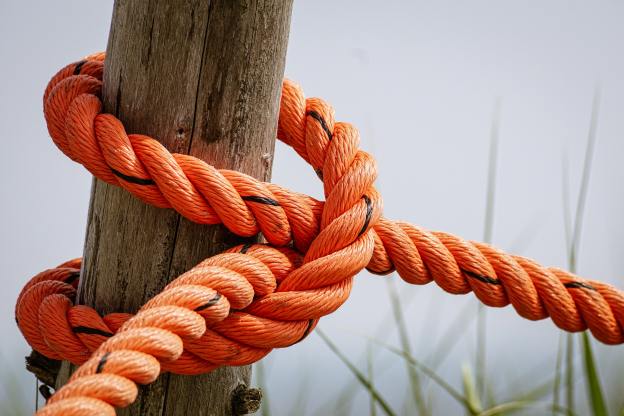

I had the fortune to grow up around men and women who were used to working with what they had. All of my grandparents and a host of great uncles, aunts and family friends were born during or just before the great depression that crashed into the United States’ economy during the 1930’s. One of the first things I noticed when I was around them on the farm, shop, or hunting club was the way they seemed to be able to secure anything with some form of rope. I have seen a friend of my father bind down a bale of hay to a flatbed seemingly as tight with just a trucker’s hitch in a rope as i could have with a chain and binder! With that in mind, I’d like to share a few knots we should all learn as well as some general rope information and links to where we can learn much more that I have room to offer on this blog. One place that knots and cordage can be key to our survival is constructing shelters. Take a look at my blog post on it Here.
Since I was only briefly a Cub Scout and never reached the levels of knot tying skill that the Boy Scouts are expected to learn, I’ll start the discussion off with some basics that I needed to learn first. This may be remedial information to some, but for those of you like me, well, we need to catch up on as much knowledge as quickly as possible.
What Rope Should I Use?
When preparing this post, like many other topics, I opened a can of worms that i wasn’t considering. While it adds length to the post, it also lets me share more information on topics we might not have considered. Awareness is a large part of prepping because we don’t have to know everything, but it helps to be aware of variables in what we know. With that said, here is a quick list of rope types that we may encounter and use with some pro’s and con’s of each.
Polypropylene: This rope is often used around water or around electrical lines due to its floating and non conductive properties. It is basically strands of plastic that are woven together making it durable in wet environments and a safer alternative if you have to tie something near electrical lines. The negative aspect of this rope is that it is easily damaged by heat or friction and must be closely inspected for melted strands. A neutral aspect is that it usually has a bit of stretch which can be good or bad depending on use. Click on the picture to get some.


Manila: Manila rope is woven from natural hemp fibers and is often seen around landscape and home decorating uses as well as some commercial use. It has a lower stretch than polypropylene and resist snapping due to the tight weave. The negative aspect of using manila rope is the lack of UV and water resistance. This rope may rot and deteriorate when left exposed to the elements for long periods of time making it less suitable for suspended loads outdoors. Click the picture below for some.


Nylon: Nylon rope is one of the most commonly used types of cordage or rigging we use these days. It’s readily available at most hardware and home improvement stores and offers superior strength to size. Its smooth surface and abrasion resistance makes it easy to tie as well as thread through pulleys. It can, however, become waterlogged and lose strength as it gets soaked but it is only a small change and nylon is still used in marine applications on a regular basis. Get some by clicking the picture.


Polyester: Polyester rope is very similar to nylon but may feel softer to the touch. It has many of the same properties as nylon and makes great all purpose rope. One negative is that polyester rope is that its less chemical resistant than nylon. Click the picture to purchase.


Rope Terminology
Standing End: The part of the rope used to pull or lift
Working End: The part of the rope use to form knots.
Bight: A doubled section of rope.
Turn: When a rope goes around and object. A round turn is the act of making a full wrap around the post or object.
What Are The Most Important Knots To Know?
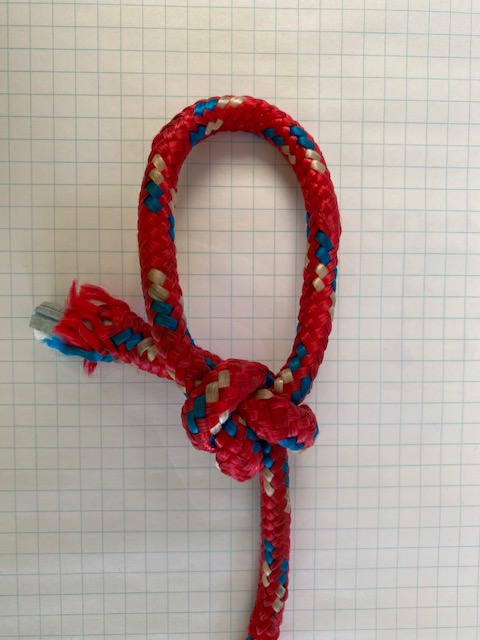
Bowline Knot: One of the most valuable knots known is the bowline. It creates a fixed loop at the working end of a rope that won’t slip or tighten up on itself and its fairly easily loosened when it is time to untie it. It can be handy to loop rope back through to use as a choker or as a way to attach hooks or other implements to the rope that need to move freely in the loop.

Trucker’s Hitch: This knot is used to make a pulley system of sorts out of the rope itself. By pulling the working end around the tie down point then back through the truckers hitch loop, we are able to double the amount of tension placed on the rope with the same effort.
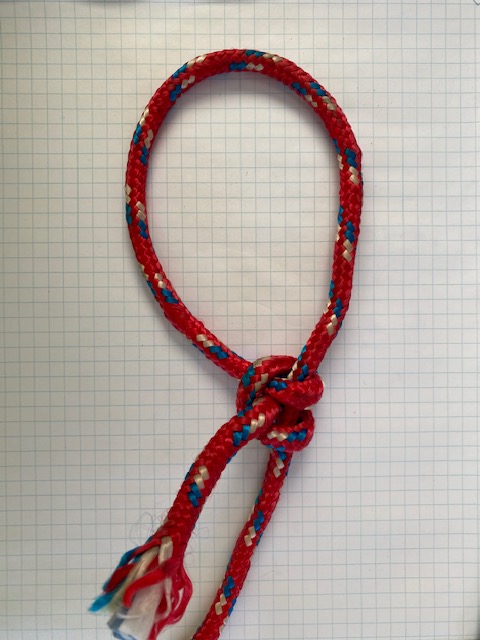
Half Hitch (and Double Half Hitch): A simple knot for a variety of purposes, the half hitch is quick to tie and untie. It shines in situations where attaching things then pulling or lifting them and disconnecting the rope is done repeatedly. Doubling the half hitch makes the knot more secure and reduces the chance of a slip.

Clove Hitch: Another quick method of attaching something to a round object is the clove hitch. It relies on the tension of the rope around its end to secure the knot. The anchor point must be larger in diameter than the rope and round for the clove hitch to be effective.

Cleat Hitch: The cleat hitch is used mainly for mooring and dock lines for boats, however it can be very handy around the homestead and farm as well. Cleats can be purchased at almost any store that sells marine supplies and can be fashioned by connecting wood or metal pieces in a crossed pattern. The cleat hitch is a very quick way to secure the standing end of the rope when used to hoist something on a rack with a pulley or a turn around a smooth object.
Where Can I Learn Other Knots?
There is almost no limit to the varieties and uses of knots so the only practical way to be able to reference all of the knots you may need is to get a guide and practice the ones that seem the most applicable to your likely scenarios. Click on the book below for an excellent knot tying guide.


Or for a more portable guide, try out these pocket cards and rope practice kit.


Disclosure: I am an Amazon affiliate and make money on qualifying purchases.



 Nick's Preparedness