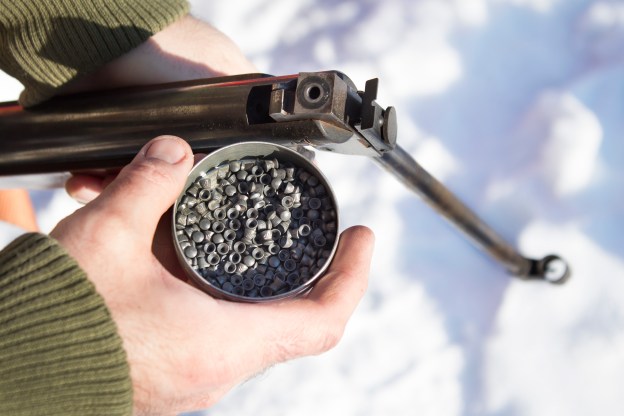

Should I Add An Air Rifle To My Prepper Arsenal?

I consider myself among the very fortunate because I had an opportunity to grow up going to a hunting camp where I got to enjoy so many outdoor activities that are often foreign to many boys and young men. While I had visited to fish in the two lakes there since I was 5, my first trip to deer camp during hunting season was when I was 8. After we arrived that day and got settled in, my father presented my with my first BB gun, a Daisy lever action, similar the the Red Ryder carbine made famous in A Christmas Story. My father had grossly underestimated the amount of time I could spend shooting beer cans off a saw horse and the two packs of Daisy Quicksilver BB’s were gone in a matter of hours. I still have that gun and it’s still pressed into service from time to time to discourage wayward scavengers from getting in the garbage or digging in the grass near the house.

While I can only hope that most of you have had some sort of similar experience, it’s far from too late to get in on the game of air rifles. I’m going to mention a few in this post and some of the benefits of having one handy, but I still encourage everyone to read my post on gun safety. Air guns are often viewed as toys but are potentially deadly and, in many cases, more likely to injure a shooter with a ricochet because of the low velocity. I have personally been hit almost directly in the tear duct with a ricocheted BB and that was close enough to being blind for me! Click Here to read about the important safety rules that should always be followed when handling any type of gun and be especially conscious of hard targets and ricochets.

Types of Air Guns

I never put much thought into how air rifles worked until several years ago when I started shooting competitively. While we were shooting rimfire silhouette matches, several of the shooters mentioned that they were going to have an air rifle side match later that day. I asked about what air rifles they used and they started explaining the various classes and designs and I suddenly realized I didn’t know very much at all. After some research, I have narrowed it down to a few categories of air guns that we may want to consider adding to our arsenals, as well as noting what I think are the best ones for the job.

Springer Style Air Guns

Springer fired air guns are fired by compressing a spring that has a plunger on it which slams forwards when the trigger is released forcing a small amount of air through a port at a high pressure, thereby pushing the BB or pellet out of the barrel. These are some of the simplest and most inexpensive air guns that we can purchase, as well as some of the most practical for prepping purposes.

The practicality comes from the fact that the guns are self contained and only require one pump or break-open action to cock them and have them ready to fire. While BB versions are limited in accuracy and velocity by the smooth bore of the gun, pellet rifles can shoot much faster and with much more accuracy. The comparison is much the same to that of the blunderbuss vs. the black powder rifles. Rifling imparts a spin to the projectile that stabilizes it in flight. The only drawbacks to using a spring operated air rifle is that there is only one shot per cocking motion and it can take significant energy to cock them so follow up shots are almost impossible when hunting.

Regardless of the limits of having only one shot at a time, I personally believe that this is the best option for us as preppers since it is simple, inexpensive and can shoot at velocities near that of some rimfire and pistol ammunition but without anywhere near the cost or need for ammo. For the sake of this post, I have included break barrel gas piston guns into this category. They function the same, however it a compressed gas piston that gets pressed instead of a spring to force air through the chamber. You can pick up a good quality rifle by clicking the picture below.

Precharged Pneumatic Air Rifles

Precharged Air rifles are the next level in accuracy and consistency for match shooters. By using pumps or compressed air tanks to fill up the onboard air chamber, the shooter prepares the rifle for repeated shots. A regulator allows a set amount of pressure to enter the chamber with each shot and this keeps the velocity consistent, which is a huge boost to accuracy. Another benefit to these rifles is the fact that many are repeaters, meaning they are capable of holding multiple pellets and can be fired repeatedly by simply cycling of the bolt or action.

In preparing for a disaster situation, we need to consider access to consumables and this applies to air guns too. Precharged pneumatic airguns not only require the pellets, they also require an external air source. Many are designed to fill from high pressure scuba tanks. These might not be the best choice for prepping as we may have limited availability to the equipment needed to refill them. Other versions are charged with a hand pump that looks similar to a bicycle pump, but is able to produce much more pressure. If you are interested in one of the latter types, click the picture below to have a closer look.

Variable Pump Air Guns

My second air gun was a Crossman pellet rifle that fired from a variable pump action. These work well and offer some degree of control by the shooter when it comes to the velocity of the pellet. We can add more velocity to the pellet by pumping the fore end lever more times, thereby building more pressure in the air chamber. While this is a beneficial ability, we need to keep in mind that consistency is the mother of accuracy. I would recommend that we determine an optimum number of pumps for our uses and adjust our sites to be zeroed at that velocity then use the same number of pumps for every shot.

The only real drawbacks of variable pump air guns is the need to pump the cylinder up between shots. Because of this, variable pumps have the same slow follow up shot timing as the springer style and may mean we only have one chance to bag that squirrel or rabbit we need to have something for dinner. For a good shooting, inexpensive model, click the picture below.

CO2 Air Guns

The last type of air gun that I’d like to mention in this post is the CO2 powered air rifle or air pistol. These are powered by small cartridges of compressed carbon dioxide that is forced through the chamber to force the pellet or BB out of the barrel and down range. They are handy and fun to shoot since they function much like a semi automatic pistol or rifle would and some are even designed to operate the slide or bolt in a way that makes them feel and function in a similar manner as their cartridge fired counterparts.

While they are lots of fun, CO2 guns rely on small disposable cartridges that don’t last very long. If you chose one of these guns, it will be necessary to have and ample supply of these cartridges along with the pellets or BB’s you plan to shoot. Even with that drawback, I do consider them useful to us in one aspect. The small cylinder size allows pellet pistols to be made as near replicas of cartridge fired side arms and can be used for quiet indoor practice, if you have some form pellet trap assembled to catch the projectile safely. Click here for one that is a close copy of my daily carry gun.

Air Rifles For Big Game Hunting

While I have not been following the trend closely, there has been a great deal of technological advancement in bigger bore air rifles in the last several years, but they aren’t new by any means. Lewis and Clark even carried one on their expedition across North America and it may have been the deadliest gun they had! I have yet to try one and see the true effectiveness of these, however some of the bullet weights and velocities that are advertised are almost that of centerfire pistol ammunition and can easily take down medium to large game within certain ranges and with proper shot placement. Without any experience in the area I won’t offer a recommendation on a particular gun, however this book may help you learn more about what to expect should you decide to add a big bore or any size air rifle to your arsenal for hunting.

Other Considerations When Shooting Air Rifles

Again, I want to stress that these are not toys, but there are some other considerations that make air guns a little different. One of the most important differences is the design of the accessories, especially telescopic sights. Although there is very little recoil from air rifles, many of them actually recoil away from the shooter when the spring or piston releases. Most scopes designed for cartridge fed guns are designed to absorb recoil against the shooter and can be damaged and fail if used on an air rifle. Making sure that the sights and accessories you chose are made for your particular type of air rifle can save you from expensive repairs later on.

Disclosure: I am an Amazon affiliate and may make money on qualifying purchases.


Two Way Radios For Survival Communication

Those of us fortunate enough to have grown up in much of the latter half of the 20th century spent some of our formative years in front of a television set watching movies about police, soldiers, or truckers who used two way radios to communicate. The citizen’s band or CB radio became popular with truck drivers and introduced an entire lexicon for an industry. We all wanted to be Snowman or Bandit in that old truck or John and Ponch riding scout on motorcycles for the California Highway Patrol. If you ever wonder where the band Seven Mary Three got its name, it’s from the radio call signs of the two officers on CHiP’s Patrol!

There is no doubt that communications technology is advancing daily, but there’s still plenty of benefit to having access to some version of a two way radio to keep in contact with others. For other information about powering and using different methods of communication take a look at my Communications Category.

Types of Two Way Radios For Preppers

Just as wired communications range from two tin cans with a string between them to fiber optic cables transmitting our voices as light signals, There are multiple levels of radio communication.

Radio waves are part of the electromagnetic spectrum along with microwaves, infrared, visible light, ultraviolet, x-rays and gamma-rays. Radio frequencies make up a very small part of the entire spectrum but still have several subsets within their assigned frequencies. Common acronyms heard in radio discussions are VHF (very high frequency) and UHF (ultra high frequency). Frequency is determined by the speed and wave length of a signal and broadcasting on different frequencies allows for lots of traffic without interruption of other channels. Without getting into all of the exact details of how radios work, we can still make great use of them for prepping purposes.

Citizen’s Band Radio For Preppers

As I mentioned in the introduction of this post, the CB radio talked its way into the hearts of America as movies about truck drivers and their antics filled the screens starting in the early 1970’s. The language of the CB radio included things such as 10-codes. We learned to say “10-4” to acknowledge or agree without even thinking about it. Other phrases such as “good buddy” are likely to get a less approving response from truckers these days though so don’t assume that it’s the thing to say just because you saw in on television.

The benefit of citizen’s band radio is the simplicity and availability. Every truck stop I have ever stepped into has had a section of the store dedicated to radios and accessories. While the sky is the limit where complexity is concerned, a basic CB radio, and antenna, and a coaxial cable to connect them are all we need to communicate from our home or vehicles. The allotted frequencies for CB radio limits it to 40 channels, however some radios have the ability to switch to upper or lower side bands to make use of the gaps in between the 40 standard frequencies. This can make communications a bit crowded in some areas where there is a lot of radio traffic, so be prepared to change channels often and make sure you have a plan to communicate these changes with your group. Another limiting factor for CB radios is the distance that they can transmit. Tuning a radio and antenna can help us communicate further, but longer distance CB communication requires everyone have an equally well tuned system. Most stock CB radios are limited to output wattage, but a quality CB shop will usually make minor modifications to improve the performance, often for free if you purchase the radio from them.

A few other basics for CB users. Channel 19 is where you will find most of the truckers communicating so it can be helpful to monitor for traffic and law enforcement information. Channel 9 is designated as an emergency channel, but who monitors it and how well it is monitored is uncertain. If cellular and satellite communications begin to fail, I’m sure that there will be many agencies that are forced to return to channel 9 monitoring, but I wouldn’t depend on it in normal circumstances.

If you are looking for a quality CB radio, click on the picture below. Cobra electronics has been one of the most well known CB radio manufacturers for decades.

Family Radio Service Bands For Preppers

Due to the popularity of CB radios in the 70’s and 80’s, there was much more traffic in the lower radio frequencies. This began to cause a crowding issue between CB radios and walkie talkies/two way radios, (not to be confused with hand held CB Radios). According to midlandusa.com, Radio Shack played a huge part in convincing the FCC that there needed to be a defined area on the radio frequency spectrum for recreational use. This lead to the Family Radio Service (FRS) bands between 462 and 467 mhz. Most of the units available in this market are walkie talkies such as the ones used by hunters on a regular basis. They are generally inexpensive and easy to use, however they have limited range due to the low wattage output. For communications with those in relatively close to us, these radios are a good option. Higher quality and more complicated programable radios can use these channels and have the accessories and support to connect with powered hearing protection and microphone options that make them great for hands free communication that comes in handy when conducting security patrols with a team. Click on the picture below for some basic FRS two way radios.

Within the FRS band of channels is another higher powered option. The General Mobile Radio Service or GMRS. GMRS radios can operate on the FRS channels as well as additional bands within the FRS spectrum and are much more powerful. Because of the higher wattage and larger broadcast area, The FCC requires licensing for GMRS operators, however, the FCC rarely gets involved in the area of civilian two way radio communications on FRS bands unless there are complaints of misuse or abuse of the system. I would recommend that everyone in your group be mindful of the potential of FCC intervention. While there is no current push to crack down on FRS transmissions, political climates have brought governments to use any means available to regulate or pressure individuals throughout history. Suppressing communications is a very effective method of disrupting any organized group and if the regulatory system can help do that, all the better for a corrupt government. Click on the picture below for a GMRS setup.

HAM Radio Bands For Preppers

One of the best communications devices for us as preppers is Amateur Radio, or Ham Radio as it’s commonly known. This is an area in which I have yet to venture, but my research shows that Amateur Radio has the ability to transmit hundreds of miles and even into space. There are also many Ham Radio operators that are still active in communicating as a hobby and many groups and associations that support the use of amateur radio. Because of the high wattage and broadcast area that these radios are capable of, they also require a license, however these are taken much more seriously by other operators as well as the FCC. Broadcasting on these bands without a license and legitimate call sign will definitely attract attention so its best to learn the proper protocols before considering this communications option. I’m not knowledgeable enough yet to recommend a specific radio, however clicking the picture below will get you to a book that should help explain more of the basics than I am familiar with. I’ll be adding to my library as well.

OPSEC When Using Two Way Radios

Operational Security (OPSEC) is of dire importance in serious preparedness events. With the potential for widespread unrest after major disasters or political shifts and uprisings, we want to keep our personal and group plans and our resources out of the eyes and ears of others. We easily forget about OPSEC when seeing police and military personnel rattling off details about positions and movements over a radio or field phone, but we have to stop and remember that some of what we see is Hollywood’s portrayal of events, not necessarily reality. We also should note that the military is often using some form of encrypted radio communication that limits the chances of anyone without the same encryption software being able to decipher the communication. It pays dividends in security to remember that we are easily eavesdropped upon by others even when on our cell phones, but it takes zero advanced technology to listen in on an unencrypted two way radio conversation. The United States realized this and enlisted the Navajo Code Talkers during World War II to keep the Japanese from breaking their radio code and thwarting the U.S. attacks. To maintain some form of secrecy, I recommend that you and your group or team consider setting up some form of code. The book I currently recommend as a source of information for subversion is pictured below. While it might not directly give the answers we are looking for pertaining to coded communication among other handy skills for preppers, it has a detailed list of sources to find exactly the information we need. Click the picture to get a copy.

Disclosure: I am an Amazon affiliate and may make money from qualified purchases.