
Author Archives: nickspreparedness5277

How Can I Get Solar Energy Without Spending a Fortune?

Anytime someone mentions living “off the grid,” one of the first thoughts many of us have is having a bank of solar panels to provide for the small amounts of electricity we plan to still need. Now, I realize that to truly live like our ancestors did, we would be completely free of the need of electricity, however, I personally don’t want to give up some benefits of electrical power. One tool that we as prepper should maintain some electrical reserve for is our phone/radio communications. Most of the two way radios as well as many AM/FM radios, including those with weather bands, are available in a 12 volt DC version. If we already have some of those devices in an AC version, an Inverter can help us make use of battery power. Cellular phones are also easily charged and the smartphones of today can house tons of information as well as access to even more critical news such as weather alerts. If you want to read more about some of the things that even deactivated smartphones can do for us, check out my blog post on them Here.

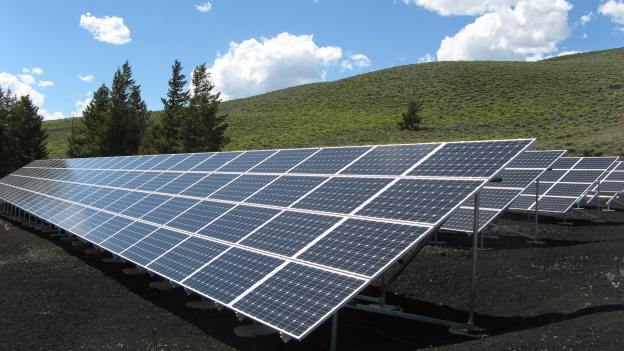
While solar power sources capable of producing energy comparable to what we receive from the electrical grid take thousands upon thousands of dollars to install, there are many smaller solar setups that can help us maintain some of our most critical energy needs without breaking the bank.

Small And Packable Solar Power Options

When we have to travel on foot to a camp site or bug out location, we have to cut the cord, both symbolically and physically with our sources of electricity. At least while in route to our destination, we have to survive on what’s in our packs, including battery power. Now, we have covered the need for portable battery packs to give our phones a boost and we can shut them off when not using them to conserve battery life, but there is a still going to be a point where we need to recharge them. One great way to do this is with a small solar charger kit. We can charge our phones as well as certain other lights and devices with one of these and buy ourselves a much longer time away from the extension cord than would be possible without it. One great option for this is the kit below. This kit by Goal Zero has a battery pack and a solar panel that can give it a full charge in about 4 hours. Get more information by clicking on the picture.

Cabin Sized Solar Power Options

Supposing all of our plans work out and we make it to our bug out location, we may be a ways from electrical power or the power grid may be down for any number of reasons. Such a scenario is one where we can benefit from a larger system, but still not have to spend more money on the solar panels than the whole cabin or bunker. It’s important to keep a realistic view of what we can power with a small system and not over extend it or we will be sitting in the dark for a while until it can recharge. We will still have to ration our power usage, however modern LED lighting among other efficient appliances can help us get a lot of use out of a little bit of battery storage.

Based on our goals and timeframe, we can use the systems for not only lighting and charging, but for other appliances like the 12 volt ice makers and refrigerators that I mentioned in another post. We can now begin to harvest and store meat and plants to eat with less wasted food. Adding fresh protein and greens to our caches of dried and non perishable foods can help our physical and mental health in a survival situation by keeping us nourished and healthy. If you want to read more about survival refrigeration, click Here.

It is important to remember that solar power is a system that uses panels to absorb the energy and regulators and chargers to store the energy in batteries and then to feed that electricity to the circuits, so we need to do some close research into our actual needs, but I want to present one setup that might be as close to a turn key system as we can find. The Goal Zero Yeti line of power packs along with one of their foldable briefcase style solar panels is a great setup that we don’t have to do any of our own wiring to get up and going. It’s also a great option to have at home for short term power outages and is much simpler than having to hook up and start a gasoline or diesel powered generator outdoors. Click the pictures below to see each part of the system.

Final Thought on Inexpensive Solar Energy

As with almost everything, we get what we pay for. Don’t expect cheap products to last forever and have a plan to maintain your systems as needed. Also, check them often. batteries lose their ability to maintain a charge and chargers and controllers quit working unexpectedly. The items and systems we ignore may do the same to us when we need them the most. Have a plan and a backup plan and remember that one size does not fit all. You may find yourself in need of a much more sophisticated system and I hope to be able to post on one in more detail in the future to help guide everyone that needs it.

Disclosure: I am an Amazon affiliate and may make money from qualifying purchases.


How Do I Sharpen A Knife?

While I don’t make an obscene amount of money, I’d still bet my paycheck that an honest survey of anyone who has spent time outdoors would reveal that a knife is one of the most important survival tools to have. I would dare say that a good knife could serve more purposes than any other tool or object that we might posses, but it will be much more effective, and surprisingly, safer, if it is kept sharp.

Sharpening a knife is a mechanical action caused by using a stone or abrasive surface to remove very small amounts of metal from the edge of blade until it is back to a fine point. Sounds simple, right? The fact is that it is one of many skills that require us to develop a “feel” for the work. The mechanical idea that the harder or faster we move the blade over the stone or belt, the sharper it will get, but there is a bit of finesse involved that is hard to describe and has to be felt. I’ve had much more success with some methods than others, however I have had several epiphanies where the cartoon light bulb over my head lit up I finally understood what to do. Because I have no way to share this enlightenment with everyone other than words, I’ll keep this basic and let everyone experiment with methods until each person finds his or her preference. If you’d like to read more about some knives I like, click to get to my blog post here.

Types of Blades

I won’t get into the shapes of blades other than to mention that it is important to follow the curvature of the blade edge as it angles or curves to form the shape of the knife blade. In the future I plan to do product and detail articles on different knives and blade designs and I’ll try to add sharpening tips for each one as I post them. For this post, however, simply try to follow the edge as it curves or turns.

Double Bevel Blades: Most common knives that we find in our pockets, packs, and kitchens have a double bevel. When held with the blade vertical, the cutting edge of the blade is ground to a symmetrical “V” shape. To create this “V” the blade is finished and sharpened by grinding both sides of the cutting edge equally to form a sharp edge. To maintain the sharpness of a double bevel blade, sharpening and honing must be applied evenly to both sides of the blade to keep the original edge shape balanced and even.

Scissors/Single Bevel blades: Some knives, hand tools, and most scissors are single bevel blades. they are flat on one side with the other being ground to form an asymmetrical “V” edge. If we look closely at a pair of scissors, we can see that the inside of the blades where they meet as we close them to cut are flat. Only the outside of each blade has been ground to a bevel. For scissors and shears, this is necessary because beveling the insides of the blade leaves a gap between the cutting surfaces and will simply bind the material between the two blades.

Types of Sharpeners

Whetstone: Probably the first type of sharpener that comes to mind for many of us is a sharpening stone. I’m sure our ancestors spent considerable time finding the best sharpening stones in nature or trading for one with someone who has, but we are fortunate enough to be able to purchase high quality stones that have multiple surfaces and should last a lifetime. Most sharpeners, regardless of design will have a coarse grit for shaping and one or more finer stones or grits to polish the edge to a razor sharpness. Sometimes a knife can be quickly sharpened by just a touch up on the fine stone, however a dull knife is almost always started on the coarse side. The first order of business when using a sharpening stone is to apply enough mineral oil to cover the entire stone in an even coat. Depending on the exact edge geometry of the knife, we should hold the blade at a 10 to 15 degree angle from the stone and draw it back towards our body away from the edge as we sweep the length of the blade across the stone. The longer the blade, the wider we have to sweep to cover the entire edge. Repeating this procedure equally on each side, we should get the blade to a moderate sharpness then flip the stone to the finer sides and continue. Take a look at a good whetstone kit by clicking the picture below

Pull Through: A pull through knife sharpener has a guard or housing that contains some sort of sharpening stone, ceramic, or steel. We simple place the blade of the knife into a groove and draw it back to us in a pulling motion. These sharpeners vary in size from a small handheld model to a large counter top setup with several slots for different angles. Click the picture below for an inexpensive pull through sharpener.

Electric powered: For those with multiple knives that they use regularly, an electric knife sharpener is a great option. Some of these use stones or sharpening steel discs mounted inside a housing with an electric motor while others use an exposed sanding belt to sharpen blades. Theses systems can provide amazing results because they usually have blade rests that keep the blade at an optimal angle for us to make it easier to sharpen. One word of caution for those with electric sharpeners: careless use can ruin a blade. Using too coarse of a stone or belt for too long can effectively grind the blade down to nothing. Also removing excessive amounts of metal can remove the heat treated portions of some blades making them too soft to keep an edge. Click on the picture below for one of the best sharpening systems out there

Sharpening Rod: If you’ve ever seen a chef sharpen a knife, you may have seem him or her use a sharpening steel rod. Usually sharpening rods are cylindrical rods with a hilt and handle on one end to hold it with. They work in the same manner as a stone by keeping a 10 to 15 degree angle and sweeping the length of the blade across during the stroke. For finer work and getting knives to a razor edge, a honing rod has a finer edge to really sharpen the blade. An added benefit of sharpening rods is that they can also be used to sharpen the recessed areas of serrated knife blades. Click on the pic to get a closer look at one.

Ceramic: The method I have personally found to work best for me is the ceramic rod. I have had a sharpener system called Croc Sticks since I was probably 10 years old. It consists of a wooden base that holds two ceramic rods at two different angles, one on each side. This creates a coarse and fine sharpening sequence that really works well for me. Using one of these is where I learned that “feel” is very important. I found that letting the weight of the knife control the pressure the blade places on the ceramic rods made for much quicker sharpening than trying to add force to it. I can’t help but to recommend this method to everyone because of the simplicity and how forgiving it is to use. Click the picture below to find a good set.

Final Thoughts on Knife Sharpening

I plan on continuing this post in more detail as I review different knives both here and on YouTube, but there’s no need to wait around for me if you want to get started. Most knife manufacturers have sharpening instructions available on their websites and quality sharpeners of all types will come with some instructions as well. Get your dull blades out and start practicing!

Disclosure: I am an Amazon affiliate and may make money of qualifying purchases.