

If you’ve ever broken down on an automobile trip, you know just how frustrating it can be, especially when it was completely preventable. This may seem to be a basic post, but I know how easily we can overlook the little things and while breaking down on a road trip is a real inconvenience, in a survival or evacuation situation, car trouble could be disastrous. Keeping our vehicles prepared isn’t as glamorous feeling as taking a trip to the range to run pistol drills, or going hiking with our bug out bag to test the gear, but we depend on our cars and trucks daily and hopefully we’ll never have to rely on our gun fighting or escape and evasion skills. In this post, I am focusing on the mechanical maintenance aspects of preparing our vehicles. To get read about other vehicle preparation considerations, click here for my Vehicle Preparedness category.
How Do I Check My Tires Before a Trip?
There are very few vehicle factors that can have as great an effect on our vehicle’s safety and performance as our tires. Not only do they grip the road and keep us from sliding and spinning, our tires can also let us know of other potential problems with our cars. Lets look at some of the things we need to check on our tires before any trip.
How Much Air Should Be in My Tires?
If ever there was an obvious tire problem, it is a flat, however there’s a pretty big difference from being completely flat and safely inflated. Rule of thumb methods of checking air have been around since pneumatic tires were invented. Kicking the side, pushing against the tire with a knee, and bumping tires with a hammer or small bat are all used, but none can replace a properly working air gauge. Simply unscrew the cap on the valve stem protruding from the wheel and press the gauge against the stem and read the gauge. In the United States. we generally use PSI (pounds per square inch) as our pressure unit for tires. Tire pressure information can be found in the owner’s manual, in the driver’s side door jamb, and most importantly, on the side wall of the tire. The sidewall pressure recommendation should mirror the owner’s manual or door jamb information. If not, you may have the incorrect size or load rated tire which can cause additional issues.
One other factor to consider with tire inflation is that air expands as it heats up so you want to check the pressure in your tires before you begin driving to be the most accurate. Also when the seasons change, you might find several PSI difference that you need to correct. If you don’t have a reliable tire gauge, click on the one below to get one.


When Should I Replace My Tires?
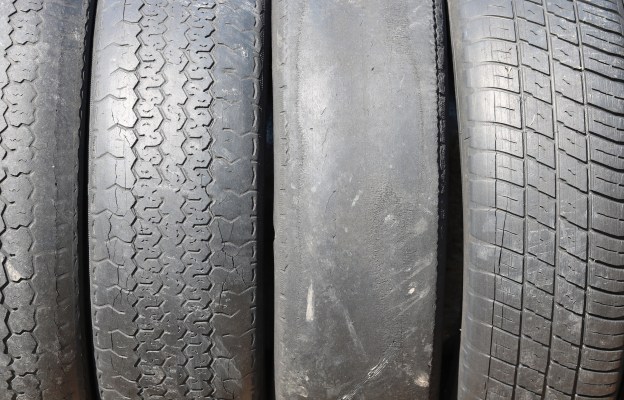
Here in the States we still use the imperial system of measurement based on the inch. For tire wear, we divide that in to 32’s of an inch. Different tire manufacturers may have specific minimum tread depths, however the legal minimum tread depth for tires in most cases is 2/32 of an inch (1.6mm). Now grab your nearest tape measure or ruler and take a look at that. It’s pretty near nothing! Just because they are technically legal, don’t assume that tires worn to 2/32 of an inch are safe on anything other than dry, smooth roads in perfect conditions.
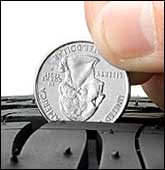
Ideally, we would keep new tires on our vehicles all the time, but that is not realistic. So keep a close eye on the tread. Most tires have wear indicators which are higher sections of rubber in the tread that indicate the tire should be replaced once the rest of the tread matches the depth of the indicator rubber. Also, make sure that you check the depth all the way across the tire surface. An out of line vehicle can have good tread on the outside of the tread and towards the inner side wall be bare and dangerous. you can purchase a tread depth gauge here or use the “quarter method” to tell if you are getting close to needing new shoes for your ride. Take a look at the picture below from tirerack.com to see how to use the quarter to see if you have enough tread. If the tread reaches his head, it is close to 4/32’s of an inch deep.
What Can My Worn Tires Tell Me About My Car?
Tire wear lets us know multiple things about our tires and our vehicles as a whole. irregular wear indicates a possible suspension problem or an alignment issue. Sections of tire that appear higher or lower than the rest can indicate a tire damaged from being under or over inflated or, even worse, a tire that has become separated within. Another noticeable factor in some tire wear can be a vibration that increases with speed. If you notice any of these wear patterns or have any vibrations, have your tires checked immediately. I recently had to replace a tire that still had plenty of tread left because one of the steel belts within the tire broke and could have caused a blow out and loss of control.
What Do I Need To Check Under The Hood of My Car?
The standard answer for years to check the oil, coolant, and transmission fluid if you have an automatic transmission. Cars and trucks have evolved into sophisticated electronically controlled marvels of modern engineering, for better or worse. Getting under the hood of a late model vehicle can leave any of us cross-eyed over where things are so I’ll point out the general things to check and we can each consult our owner’s manual as to the location of the components.
How Do I Check My Engine Oil?
Oil is the life blood of our internal combustion engines. It degrades and becomes less effective over time and use so we must change it as well as the filter that removes any metal or impurities on a regular interval, usually somewhere between 3000-5000 miles for regular oils and higher for synthetics. While we leave the shop or quick oil change with fresh oil up to the fill mark, this doesn’t guarantee it will stay that way. As engines age, they can develop leaks, which we notice where we park sometimes. Also, as the components wear, the engine can begin to gradually burn some of the oil and in the case of a gasket failure, it can even leak into the coolant or vice versa. With this in mind a regular check on the oil level in between services is a good idea.
To check the oil, turn off the engine and give the oil a few minutes to pour back down through the engine to the oil pan. Remove the dipstick and wipe it clean then reinsert it and remove it to read the level. The oil should be between the low and high marks on the stick. If it is low, add the proper grade oil. If it is overfull, contact your mechanic. Engines that start “making oil” can have serious problems that can cause engine failure if they aren’t fixed.
How Do I Check My Transmission Fluid?
If you have an automatic transmission, you will likely have a separate dipstick for the fluid level, however some newer cars have a sealed transmission that can’t be checked. Consult the owner’s manual for details and how to accurately check the fluid. Most vehicles require that the engine be running and the shifter be in park or neutral. If the latter is the case, make sure you have someone to hold the brake and shift to neutral for you to check. Repeat the same remove-wipe-replace-remove then read steps as for the engine oil.
If you have a manual transmission, it will have a fill plug on the side that is usually only accessible from under the vehicle. For either transmission, look at the ground where you normally park for leaks to warn you of a potential problem.
Should I Check My Battery Before A Trip?
Most batteries today are “maintenance free” which usually means they are sealed and not meant to have water added to the cells. Because of the acid in the batteries, its not recommended to attempt to add water or chemicals to batteries unless you know exactly how, so for our purposes, battery maintenance will be limited to the outside shell of the battery and the terminal posts.
A good electrical connection is crucial for our vehicles to start and run and for the alternator to recharge the battery and maintain it. Look closely at the battery posts and cables. If they are becoming corroded or look to have a crusty looking material around the posts or cables, they need to be cleaned. You can use a regular wire brush but you can get one that much better for the job by clicking the picture below.


Once the posts and cables are clean, a mixture of baking soda and water can neutralize any corrosion or acid that has gotten on top of the battery and leave it clean and ready.
What Else Should I Check Before I Travel?
Antifreeze/Coolant: Our engine coolant prevents overheating as well as freezing in cold climates. Most cars and trucks have a plastic surge tank that we can see the coolant level through and it ranges from “cold” level to higher “hot” level because coolant will expand as it heats up. DO NOT OPEN THE COOLANT RESERVOIR OR RADIATOR CAP WHILE THE ENGINE IS HOT! The pressure can cause an overflow and severely burn you. It is also important to check the protection level of your coolant before cold weather sets in each year. You can buy a tester by clicking the picture below to make sure your coolant won’t freeze this winter.


Brake Fluid: Brake fluid is usually an indicator of our break wear. If it gradually gets lower over many thousand miles, it could simply be that our brakes are worn and it takes more fluid to fill the calipers, however brake fluid below the fill mark on a master cylinder with visible levels lets us know that we could have a leak or need to inspect our brakes for excessive wear. If you have a manual transmission, the clutch may have a similar master cylinder and fluid level as well.
Power Steering Fluid: Low power steering fluid can cause difficulty when steering, especially at low speeds and often causes a moaning or whining noise when the steering wheel is turned. The system recirculates the fluid repeatedly through the pump and lines so low power steering fluid is indicative of a leak.
Final Thoughts on Preparing Our Vehicles For A Trip
If we aren’t 100 percent sure of our abilities to inspect and perform an adequate check on our vehicle, I propose that we do two things. First, we should have a reputable garage, dealership, or quick oil change station that we trust inspect and maintain our vehicles at the regular service intervals that our owner’s manual recommends. Second, we should work to become more familiar with how and where to check all of the important components of our vehicles and how to perform some of the repairs commonly needed. You can start by learning the basics of changing a tire on my blog post here.

Disclosure: I am an Amazon affiliate and make money on qualifying purchases.



 Nick's Preparedness